What to Do When You Are Left Out of a Group Chat or Activity
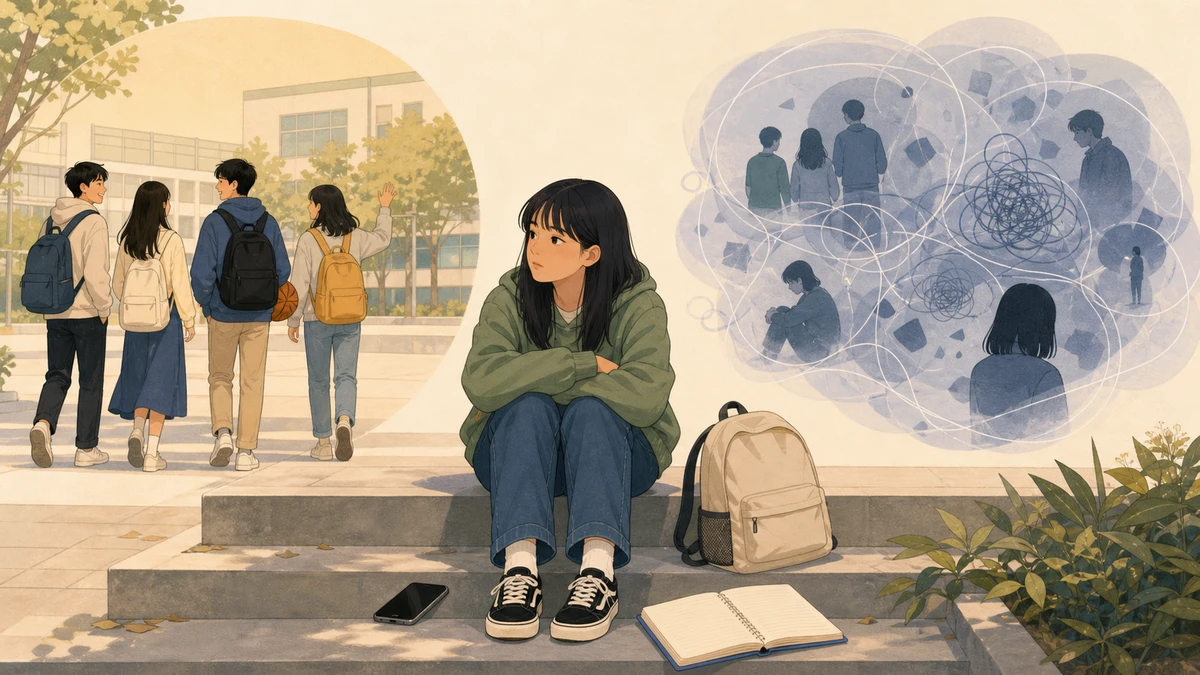
You see the photos before anyone tells you there was a plan. A friend says, “We talked about it in the group,” then goes quiet because you are not in that group. Everyone seems to know where to meet after school except you.
The hurt arrives first. Then the questions follow: Am I making too much of this? Am I not good enough?
Those thoughts can feel convincing without being true. When you are suddenly left out, your mind wants to fill the empty space with an explanation, and you may be the first person it blames. But one invitation you did not receive can only tell you that you were not included in this plan. It cannot prove that you are unworthy of friendship. The pain does not mean you are weak. It means the relationship mattered to you.
The first job, then, is not to prove who dislikes you. It is to make sure you do not join the exclusion by abandoning yourself too.
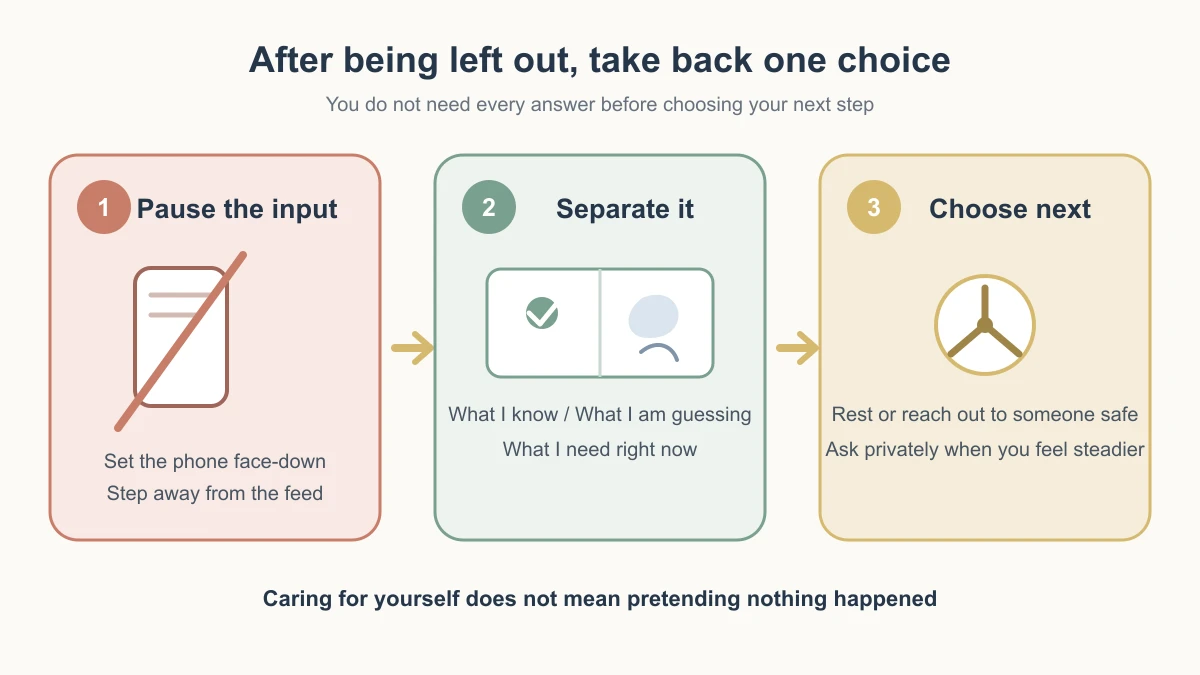
Reduce the input before you demand an answer
The moment you realize you were left out, your mind may turn into an investigator. You replay the last conversation. You check everyone’s stories. You compare timestamps. You search for the message where the friendship must have changed.
That behavior makes sense. Uncertainty is painful, and gathering information feels like control. But refreshing the same posts rarely gives you the missing context. It usually makes you watch the exclusion happen again and again.
I would start by setting the phone face-down and leaving the feed for a while. This is not a dramatic exit. You do not need to unfollow everyone, leave every chat, or post a quote about fake friends. You are simply choosing not to make a decision at the sharpest point of the feeling.
Bring your attention back to your body. Let your exhale take a little longer. Notice whether your shoulders have risen or your jaw is tight. Wash your face, drink water, walk around the block, or press both feet into the ground. The goal is not to become perfectly calm. It is to remind your body that there is no argument you must win this minute.
Then name the feeling without insulting yourself. You might be hurt, angry, jealous, ashamed, confused, or all of them at once. “I feel left behind, and of course that hurts” is more accurate than “I am pathetic for caring.” Accuracy is a form of self-care here.
Separate what happened from what your mind added
Exclusion is painful partly because one event can turn into a complete verdict about who you are.
The known fact may be: “They went out this weekend, and I was not invited.”
The story your mind adds may be: “Everyone hates me. I am embarrassing. I will never have real friends.” Those thoughts are not random. They are your mind trying to explain a painful gap in the information. But an explanation is not the same as a confirmed fact.
Open a notebook and make room for three things:
- What I know: Only what you saw, heard, or received. Do not write motives as facts.
- What I am guessing: Include the frightening explanations, but begin them with “I am worried that…”
- What I need: Rest, comfort, clarity, respect, a direct conversation, or distance from social media may all be valid needs.
“They did not invite me” belongs in the first section. “They think I am boring” belongs in the second. “I want to know whether this was one plan or whether our friendship has changed” belongs in the third.
This exercise is not about inventing excuses for your friends. Maybe the worst explanation will turn out to be true. The point is to keep “unknown” as unknown until you have more information, instead of punishing yourself with the cruelest possible answer.
There is also a practical benefit. If you decide to talk, you now have a specific question rather than a pile of accusations. You can ask about the event and the relationship instead of forcing the other person to defend themselves against every fear you had that night.
Ask privately if the relationship matters to you
Wanting an explanation does not make you needy. If this friendship matters and you want to know whether something changed, a direct conversation can be kinder to you than endless guessing.
Choose someone in the group who has usually treated you with care. Ask privately, not in the main chat where everyone may perform for one another. Begin with the event, name the impact, and leave room for information you do not have:
“I saw that you all went out last weekend, and I realized I had not been invited. I felt left out, and I am not sure whether something happened between us. Can you tell me how the plan came together?”
If the separate group chat is what hurt, you could say:
“When you mentioned the other chat, I realized I was not in it. I am feeling unsettled. Is it only for that activity, or is there something between us that we need to talk about?”
These words do not guarantee honesty. They do not guarantee an invitation next time. Their purpose is to let you ask for reality without using a vague post, silent treatment, or sudden group exit to test whether anyone chases after you.
If you are still imagining the most devastating reply, write the message in your notes instead of sending it. Return when your body feels steadier. Replace “You all deliberately excluded me” with what you observed, how it affected you, and what you want to understand. Waiting is not surrender. It protects the part of your message you genuinely want heard.
Pay attention to the response, not only the excuse
Friendship does not require every plan to include every person. A small activity, different interests, a parent’s rule, a last-minute decision, or a closer friendship within the group can all be real. You can matter to someone without being invited to everything.
But the reason for one plan and the way someone treats your hurt are separate questions.
A response worth working with does not need perfect wording. It usually includes some willingness to listen. The person can explain how the plan happened without mocking you. They understand that discovering it through a post may have hurt. If the friendship has changed, they are honest enough to say something clearer than “you are imagining things.”
The opposite pattern matters too. Someone repeatedly calls you oversensitive, turns your private message into a joke for the group, denies events you can plainly see, or says you are important while continuing to shut you out on purpose. At that point, you are not dealing only with a missed invitation. You are learning what level of trust this relationship can hold.
I would not respond by becoming funnier, quieter, easier, or more useful until the group lets you back in. I would change how much access the relationship has to you. A “best friend” may need to become a classmate. A group that receives every free afternoon may receive less of your time. This is not revenge. It is giving the relationship a name that matches the safety it actually offers.
Do not let one group become your entire map of belonging
When one group excludes you, your world can shrink around that group. Their choice begins to feel like a vote taken by everyone who could ever know you. It is not.
Belonging can come from one classmate who is easy to sit beside, a teammate who checks in, a sibling, a cousin, a teacher, a coach, a club, or an online space with healthy boundaries. None of these connections erases what happened. Together, they keep one group from becoming the only place where your worth seems to be decided.
Try drawing your own map. Who talks to you without making you decode every sentence? Where can you show up without performing? Which adult takes your concerns seriously? This map is not a race to replace your old friends. It is a reminder that your life has more than one door.
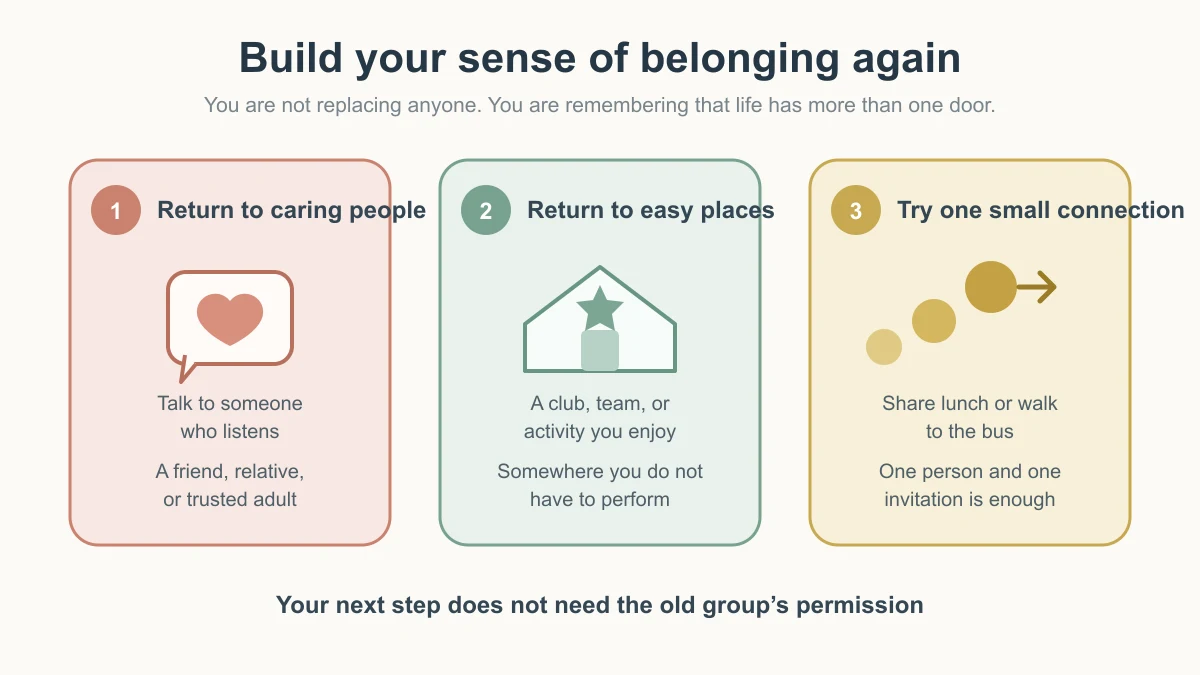
Choose one reachable action. Sit near the person who has been kind in class. Ask one peer to walk to the bus with you. Return to an activity you liked before this group became the center of your week. Tell a trusted adult what happened. These actions are not a campaign to replace your friends immediately. They move one piece of control from “Will they choose me?” back to “Who and what do I choose?”
Know when exclusion has become bullying
One missed plan is not automatically bullying. A continuing campaign to isolate or humiliate you is different.
Tell a trusted adult if people are spreading rumors, repeatedly adding and removing you from chats to provoke you, sharing private material, impersonating you, threatening you, publicly humiliating you, or organizing others not to speak to you. The problem is no longer whether you can become less sensitive. It is that a group is using social power to cause harm.
If it happens online, save the messages, dates, account names, and screenshots before blocking or reporting. You do not have to fight publicly to prove you are brave. Bring the record to a parent or caregiver, teacher, counselor, coach, or another adult who can help. Asking for support is not making a small problem bigger. When the group has more power than one person, adding adult support makes the situation fairer.
You can also be clear about what you want the adult to do. You might want them to listen first, help you plan a school conversation, document a pattern, contact the platform, or help you stay away from a place that feels unsafe. If you are afraid that telling will make things worse, say that too. A good helper needs to understand both the harm and the risk you are worried about.
Get more support if the feeling does not begin to lift
Being upset for a while after exclusion does not mean you have a mental health condition. But you also do not need to wait until you are falling apart before asking for help.
If low mood, poor sleep, stomachaches, fear of school, or the urge to hide lasts for weeks and begins to affect classes, home life, or other friendships, talk with a parent or caregiver, school counselor, doctor, or another trusted adult. You do not have to prove that things are already “bad enough” before you deserve support.
Start with a parent or caregiver, school counselor, teacher, doctor, or another adult who knows how to find appropriate support where you live. If you have thoughts of hurting yourself or someone else, or you cannot keep yourself safe, tell a trusted adult immediately and contact local emergency or crisis support. You deserve help before the situation becomes unbearable.
Being left behind does not mean you have to stay there
You are allowed to be hurt by the missing invitation. You are allowed to ask why. You do not have to act indifferent because you fear looking clingy. You also do not have to let a chat, an activity, or a few people write the final sentence about your value.
Some situations will be misunderstandings. Some conversations will make a friendship more honest. Other responses will show you that you have been working far harder than the relationship deserves. None of those outcomes requires you to attack yourself while you wait for clarity.
Being left behind does not mean you have to stand in the same place waiting for everyone else to turn around. You can move toward relationships where people speak honestly, toward people who make you feel safe, and toward places where you do not have to become smaller to belong.
Set the phone down. Separate the fact from the fear. Find one safe person. You do not have to decide the entire future of the friendship tonight. Choose one next step that is both kind and honest. That is what caring for yourself can look like: not pretending it did not hurt and not rushing to forgive, but holding on to yourself while you decide where you want to go next.